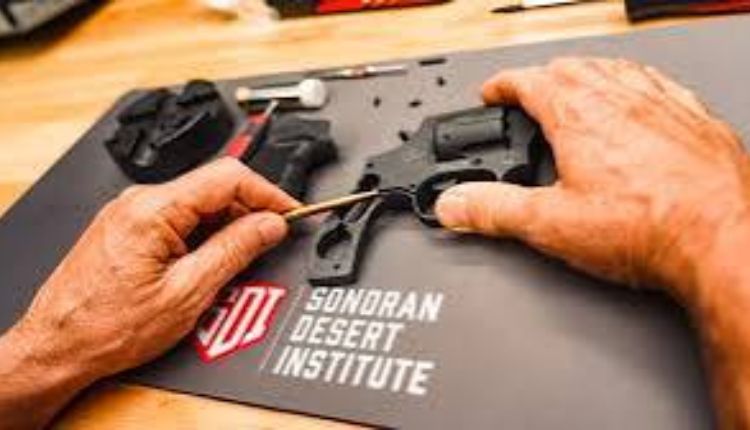
People searching the phrase “Sonoran Desert Institute worth it” are often trying to answer the same question from a practical angle. People considering technical training programs often look closely at how skills are developed through clear, repeatable methods. Many prospective students search for phrases like Sonoran Desert Institute reviews because they want to understand how training emphasizes process and how structured approaches contribute to consistent performance over time. Sonoran Desert Institute (SDI), which is accredited by the Distance Education Accrediting Commission (DEAC), focuses on firearms and uncrewed technology education and is often referenced when students examine how structured methods support technical work. Training that emphasizes step-by-step processes helps learners understand how each action contributes to the result and how consistent methods can improve accuracy over time.
That understanding matters because technical work depends on sequence, observation, and control. Students who know the process behind a task are better able to follow instructions with purpose rather than moving through the work by imitation alone. In structured training, the process gives students a way to connect individual actions with broader outcomes, which supports stronger performance over time.
Table of Contents
Process Gives Structure to Technical Work
Students often enter technical training with an interest in hands-on work, but interest alone does not indicate accuracy. Tasks in technical settings depend on a defined order, where each step supports the next. The quality of the result often depends on how carefully earlier stages are completed. When students understand this structure, they approach tasks with more discipline and less guesswork.
This is important because many mistakes begin before the visible issue appears. A poor outcome may result from a skipped check, incorrect setup or rushed early step. Students who understand the full process recognize that each stage contributes to the result. Instead of focusing only on completion, they pay attention to how the work is built from start to finish.
Knowing Each Step Improves Accuracy
Accuracy improves when students understand what each step is meant to accomplish. Tasks become easier to perform correctly when learners know why a check is required, why a tool must be used in a certain way, or why a sequence should not be altered. This understanding provides clearer direction throughout the assignment.
It also keeps students engaged with the details of the process. When each step has purpose, learners are less likely to rush or overlook parts of the task. The process becomes easier to follow because it has meaning. Over time, this awareness helps reinforce consistent work habits and supports more reliable outcomes across different assignments. It also encourages a more deliberate approach to completing each stage of the task. As students stay focused, they become more aware of how their actions influence results. This level of attention supports both accuracy and overall task performance.
Process Knowledge Supports Better Decisions
Technical tasks do not always unfold under identical conditions. Students may encounter variations in setup, timing, or materials that require them to think through their next action. Understanding the process allows them to respond with greater control because they can evaluate what is required at each stage. They rely on structured understanding rather than memorized steps alone.
This approach supports better decision-making in both routine and unfamiliar situations. Students who understand the process can recognize when something appears incorrect or when an expected outcome is missing. They can trace the issue back through the sequence and identify where adjustments are needed. Over time, this strengthens technical judgment and improves problem-solving ability.
Clear Process Helps Students Correct Errors
Students improve more efficiently when they can identify not only that an error occurred but also where it occurred. Process knowledge makes this possible. When learners understand each stage of a task, they can review their work step by step to locate where the result changed from the expected outcome.
This ability has practical value in technical training. People who search Sonoran Desert Institute reviews are often asking how well a program helps them develop control and awareness, often comparing whether training goes beyond repetition and asking if it supports structured problem-solving. Understanding the process provides students with a method to diagnose issues, adjust their approach, and improve results over time. It also helps learners approach challenges with a more organized and logical mindset. As they work through problems, they become more confident in identifying what needs to change and why. Over time, this approach supports more consistent and effective task execution across different scenarios.
Repetition Reinforces the Value of Sequence
Repeated practice helps students recognize why the process matters. The more often they complete a task, the more clearly they observe how each step affects the next. Strong outcomes are often tied to consistent preparation, careful handling, and attention to sequence.
This experience makes the process easier to trust. Students begin to see a clear connection between following a structured method and achieving reliable results. This understanding supports confidence because learners know what to expect and how to proceed. Confidence grounded in the process of knowledge tends to be more stable and dependable in technical environments.
Better Outcomes Depend on Process Awareness
Technical results improve when students treat the process as part of the skill rather than as a set of instructions to complete quickly. Process awareness keeps attention on the steps that support accuracy, safety, and consistency. It provides a stronger basis for evaluating work and understanding why one method produces better results than another.
As students continue training, process knowledge remains essential for reliable performance. Knowing each step helps learners work with purpose, recognize issues earlier, and maintain consistency across tasks.
Building Strong Results Through Process Understanding
Understanding the process is central to achieving strong technical results because it connects each action to a clear purpose. When students follow structured methods, observe each stage and apply consistent steps, they are more likely to produce accurate and reliable outcomes. This approach supports long-term skill development by reinforcing habits that extend beyond individual assignments. Through repeated practice and clear instruction, students develop the ability to approach technical work with discipline, awareness, and control.
Technical education becomes more effective when learners understand not just what to do, but why each step matters. By emphasizing the process, training programs help students build the foundation needed for firearms-related technical roles, where accuracy, consistency and structured execution are essential.
